
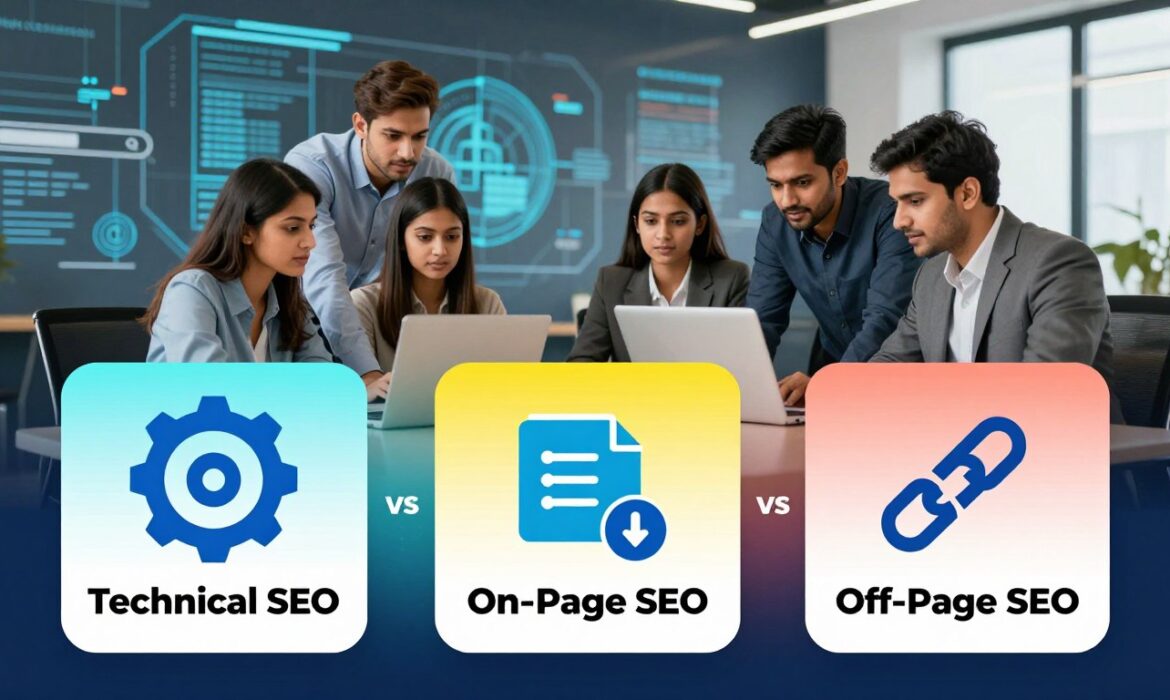
Building an online presence in India requires a strong SEO strategy, not keyword stuffing. Knowing the Technical SEO vs On-Page SEO vs Off-Page SEO differences helps businesses grow.
technical SEO strengthens your website’s foundation, while on-page SEO improves content and page elements. In contrast, off-page SEO builds authority through trusted outside connections.
Using one method alone can cause rankings to stall. An effective SEO strategy combines all three, making your site fast, useful, and trusted by search engines. This guide explains each area and shows how to improve visibility and attract meaningful traffic.
Key Takeaways
- Technical optimization ensures your website infrastructure is crawlable and fast.
- Content-focused efforts improve how search engines interpret your page relevance.
- External authority building signals trust and credibility to search algorithms.
- A balanced strategy prevents over-reliance on a single ranking factor.
- Understanding these differences helps businesses allocate resources more effectively.
Technical SEO vs On-Page SEO vs Off-Page SEO: What Each One Means
To succeed in the competitive Indian digital market, you must understand technical, on-page, and off-page strategies. These terms sound similar, but each represents a different layer of a successful search strategy. Understanding the difference between Technical SEO vs On-Page SEO and on-page SEO vs off-page SEO helps build long-term growth.
Technical SEO: Building a Search-Friendly Website Foundation
Technical SEO forms the backbone of your digital presence. It focuses on your site’s infrastructure, so search engines can access and understand pages easily. Key elements include better website crawlability and efficient search engine indexing, helping content appear in results.
Without a strong technical foundation, even excellent content may stay hidden from search engines. This work includes managing site speed, mobile responsiveness, and secure connections. These improvements create a smooth experience for search bots and human visitors.

On-Page SEO: Improving Content and Page Relevance
On-Page SEO improves individual web pages, helping them rank higher and attract more relevant traffic. It stays within your control and improves elements that users see and use. These elements include quality content, smart keyword placement, and descriptive meta tags.
Effective optimization also needs a clear heading hierarchy and clean URL structures. With On-Page SEO, your pages give readers clear value. It also helps search engines understand each published page’s context and intent.
Off-Page SEO: Strengthening Authority Beyond Your Website
Off-Page SEO covers actions outside your website that can affect rankings in search engine results pages. Its main goal is to build website authority and trust with search engines. High-quality backlinks, social signals, and brand mentions help achieve this goal.
Think of this as your site’s reputation in the digital world. When reputable websites link to your content, they give it a vote of confidence. A strong Off-Page SEO strategy helps search engines see your domain as a credible source in your industry.
How the Three SEO Areas Work Together
These three areas depend on one another and work together to drive results. Great content cannot overcome poor technical health, while a perfect site without authority may still struggle. Balance all three to build a complete SEO strategy.
- Technical SEO ensures your site is accessible and fast.
- On-Page SEO makes your content relevant and useful to users.
- Off-Page SEO builds the trust and authority needed to outrank competitors.
Together, these approaches create a strong system for sustainable growth. This balance helps businesses in India gain organic traffic and maintain a strong online presence over time.
Technical SEO Checklist for Websites in India
A strong technical foundation helps a website rank in India’s competitive digital market. Before investing in content or link building, optimize your website infrastructure for search engines. Using a detailed technical SEO checklist helps you find and fix problems before they hurt visibility.
Website Crawling, Indexing, and XML Sitemaps
Search engines use bots to find pages through website crawling. Make sure your robots.txt file does not block important pages. A clean, updated XML sitemap helps search engines find and index content faster.
A regular technical SEO audit can find broken links and orphan pages. These problems can stop search engines from understanding your site hierarchy. Limit indexable pages to high-quality content, so search engines use your crawl budget well.
Mobile Usability and Core Web Vitals
Most internet users in India access the web through smartphones, so mobile SEO is essential. Your site must respond well and work smoothly on every screen size. Google favors sites that load quickly and keep a stable layout.
Track your Core Web Vitals to support strong rankings. These metrics measure loading speed, interactivity, and visual stability. Better scores often improve user retention and conversion rates for your business.
HTTPS, Website Security, and URL Structure
Security matters to users and search engines. HTTPS encrypts data and builds trust with visitors. A secure website is a key ranking signal you cannot ignore.
Keep your URL structure clean, descriptive, and easy to read. Avoid long number strings and complex parameters in links. A logical hierarchy helps search engines sort your pages.
Canonical Tags, Redirects, and Duplicate Content
Duplicate content can confuse search engines and weaken your ranking potential. Use canonical tags to show which page version is primary. This matters especially for e-commerce sites with multiple product variations.
Manage redirects carefully when you move or delete pages. 301 redirects send users and search engines to the right destination. This preserves your hard-earned authority and prevents 404 errors.
Structured Data for Indian Businesses and Local Search
Using structured data gives search engines specific business details. These details include your physical address, service areas, and customer reviews. Structured data can place your site in rich snippets and significantly raise click-through rates.
For Indian businesses, marking up local information can improve visibility in regional searches. It helps search engines connect your brand with local customers seeking your services. Below is a summary of key technical focus areas for your website.
| Technical Element | Primary Benefit | Action Required |
|---|---|---|
| XML Sitemap | Faster Indexing | Submit to Search Console |
| Mobile SEO | Better User Experience | Ensure Responsive Design |
| HTTPS | Site Security | Install SSL Certificate |
| Structured Data | Rich Snippets | Add Schema Markup |
On-Page SEO Optimization Strategies That Improve Rankings
Mastering on-page SEO optimization helps businesses attract organic traffic in India’s competitive digital market. Refining each page helps search engines understand your content and gives visitors a smooth experience.
Search Intent, Keyword Placement, and Content Depth
Understanding search intent builds a strong SEO strategy. Identify whether users want to learn, buy, or find a specific website. Match your content to these needs so pages stay useful and relevant.
Natural keyword placement helps search engines sort pages without hurting readability. Create detailed content that answers user questions fully. This builds trust and keeps visitors on your site longer.
| Intent Type | User Goal | Content Strategy |
|---|---|---|
| Informational | Seeking knowledge | Guides and blog posts |
| Commercial | Researching options | Comparison and reviews |
| Transactional | Ready to purchase | Product and landing pages |
Title Tags, Meta Descriptions, and Heading Hierarchy
Your title tags are the first contact users have with search results. Keep them concise and descriptive, and include primary keywords to improve click-through rates. Likewise, well-written meta descriptions briefly summarize pages and encourage users to click your link.
A logical heading hierarchy also supports accessibility. Use H1 for your main topic, followed by H2 and H3 tags for sections. This structure helps users and search engines navigate your content.
Internal Linking and Topic Clusters
Strategic internal linking connects related pages and creates a clear path for crawlers. Grouping content into topic clusters builds authority on specific subjects. This approach keeps users exploring your site and signals value to search engines.
Image Optimization, Accessibility, and Media Content
High-quality images increase user engagement, but you must optimize them for speed. Use descriptive alt text to support accessibility and give search engines context. Fast-loading media helps ensure your seo optimization strategies do not suffer from poor page performance.
Localized Content for Indian Audiences and Regional Searches
Using localized SEO is vital for businesses targeting specific Indian cities or states. Adapt content to regional preferences, local festivals, and industry trends in your area. This personal touch makes your brand relatable and improves local search rankings.
Off-Page SEO Methods for Building Website Authority
Building trust in India’s competitive market requires an off-page SEO strategy that earns recognition from outside sources. Your site structure provides the foundation, while external signals act as votes of confidence for search engines. Knowing the difference between on-page SEO vs off-page SEO helps balance internal improvements with outside growth.
High-Quality Backlinks and Digital PR
Earning high-quality backlinks helps build domain authority. These links should come from reputable, relevant websites in your industry. digital PR can earn editorial coverage in major news outlets or industry-specific blogs, bringing traffic and authority.
Relevant Link Opportunities in Indian Industries
To succeed in India, build relationships with local trade organizations, professional associations, and regional suppliers. Community resources and local event sponsorships often create natural link opportunities. These connections show search engines that your business supports the local economy.
Brand Mentions, Reviews, and Online Reputation
Even without a direct link, brand mentions across the web can build authority. A positive online reputation matters because customer reviews influence user trust and search rankings. Ask satisfied clients to share their experiences on public platforms and build a consistent digital footprint.
Local Citations and Google Business Profile Signals
For businesses targeting local customers, local citations are vital for visibility. Keep your Name, Address, and Phone (NAP) information consistent across all directories. Optimize your Google Business Profile with accurate details and regular updates to improve local map pack visibility.
Why Link Quality Matters More Than Link Quantity
Modern search algorithms value a linking site’s relevance and authority more than the number of links. Manipulative link schemes can cause penalties, while organic, editorial links offer long-term stability. Create content that others naturally want to cite and share.
| Strategy | Primary Benefit | Implementation Effort |
|---|---|---|
| Digital PR | High Authority | High |
| Local Citations | Local Visibility | Medium |
| Brand Mentions | Trust Signals | Low |
| Editorial Backlinks | Ranking Power | High |
Technical SEO vs On-Page SEO vs Off-Page SEO: Key Differences
Understanding Technical SEO vs On-Page SEO vs Off-Page SEO differences helps create a balanced search strategy. The technical seo vs on-page seo view shows how each area improves visibility through different methods and skills. This knowledge helps businesses in India use resources wisely for better results.
Differences in Primary Purpose and Ranking Influence
Technical SEO forms your site’s backbone by helping search engines crawl and index pages without errors. On-page work makes content relevant and answers your audience’s specific queries. Off-page work builds trust by showing that reputable sites value your content.
Differences in Implementation, Resources, and Expertise
Implementation differs greatly: technical tasks often need developers or specialists for server settings and site architecture. In contrast, seo optimization strategies for on-page content usually belong to marketing teams and writers. Off-page efforts depend on relationships, digital PR, and outreach, which require strong communication skills.
Differences in Measurement and Performance Metrics
You must track specific SEO metrics to measure success in each area. Technical health uses crawl logs, site speed, and indexation reports. On-page success uses keyword rankings and user engagement, while off-page results use backlink quality, brand mentions, and referral traffic.
On-Page SEO vs Off-Page SEO in Practical Campaigns
In practical campaigns, these areas work together to improve organic performance. High-quality content offers value that can earn links, while a strong backlink profile helps it rank for competitive terms. Balancing these ranking factors keeps your site useful and authoritative.
How Technical Issues Can Limit Strong Content and Backlinks
Even the best content and highest backlink quality can fail when major technical flaws affect your site. If slow pages or broken redirects block access, your organic performance will suffer despite other efforts. Fixing these technical barriers helps your seo optimization strategies reach their full potential.
| SEO Pillar | Primary Focus | Key Resource | Main Metric |
|---|---|---|---|
| Technical SEO | Site Foundation | Developers | Crawl Health |
| On-Page SEO | Content Relevance | Content Team | Keyword Rankings |
| Off-Page SEO | Site Authority | PR/Outreach | Referring Domains |
How to Combine the Three SEO Approaches Into One Strategy
Sustainable search growth requires an integrated SEO strategy that unites your technical foundation, content quality, and external authority. Treat these three pillars as one engine to avoid common problems and improve your return on investment. This unified approach connects every effort to your bottom line.
Audit Technical Health Before Expanding Content
Before investing heavily in new pages, make sure search engines can access your website. A complete technical SEO audit creates a strong foundation for future growth. Use a technical SEO checklist to find and fix issues that could limit your visibility.
- Fix crawl errors and broken links to improve bot navigation.
- Optimize page load speeds to meet Core Web Vitals standards.
- Ensure your site is fully mobile-responsive for Indian users.
- Resolve duplicate content issues using canonical tags.
Match On-Page Improvements With Search Intent
After your site is technically sound, focus on your content strategy. Successful pages must answer what your target audience searches for in India. Matching content with user intent helps visitors find what they need and signals quality to search engines.
Create depth and value in every article or product page. Use clear heading levels and descriptive meta tags so search engines understand your content. This alignment improves relevance and keeps users engaged longer.
Earn Authority After Publishing Valuable Pages
After publishing your content, use a strong link building strategy to increase your site’s credibility. High-quality backlinks show that other reputable websites trust your site. Use ethical outreach, digital PR, and industry partnerships to earn links naturally.
Quality always outweighs quantity in link building. A few links from authoritative Indian industry portals matter more than hundreds of low-quality spam links. Steady authority building helps valuable pages climb search rankings over time.
Prioritize SEO Work for Small Businesses and Startups in India
For small business SEO India, limited resources make prioritization essential. Focus on high-impact tasks that can bring quick results for your specific niche. Start by securing your local presence with Google Business Profile signals and localized keywords.
Small teams should use a phased approach to avoid burnout. Handle the most critical technical fixes first, then create high-intent content. These core areas help you compete effectively, even with a modest budget.
Track Rankings, Organic Traffic, Conversions, and Crawl Health
Effective SEO performance tracking completes the process. Monitor progress to learn what works and where you need to pivot. Use reliable analytics tools to track your site’s health and growth.
| Metric Category | Key Focus Area | Business Impact |
|---|---|---|
| Technical | Crawl Health | Improved Indexing |
| Content | Organic Traffic | Higher Visibility |
| Conversion | Lead Generation | Revenue Growth |
Regularly reviewing these metrics helps you make data-driven decisions. If rankings stall, check crawl health or review your content depth. Consistent monitoring keeps your strategy agile and effective in a competitive digital landscape.
Conclusion
Long-term success starts with knowing how optimization pillars work together. Mastering Technical SEO vs On-Page SEO vs Off-Page SEO helps your brand build a strong digital presence. Each pillar has a unique role for search engines like Google.
A comprehensive SEO strategy can turn a working website into a market leader. Keep your technical foundation sound, and make sure your content gives audiences real value. External signals build trust and complete this growth cycle.
Indian businesses that focus on these three areas can gain significant improvements in organic visibility. Regularly monitoring site health and performance metrics helps you stay ahead of the competition. This proactive approach builds sustainable search rankings and drives real business results.
Begin by auditing your current site architecture today. Align your content with the specific needs of your local customers. Your commitment to these practices can turn your online footprint into a powerful asset for years to come.
About Us
RightClick Solutions is a digital marketing agency serving businesses in Pune, Pimpri Chinchwad, Sangvi, and nearby areas. We provide SEO, technical SEO, on-page SEO, off-page SEO, Google Business Profile optimization, website development, and digital marketing solutions focused on improving online visibility and generating business opportunities.
AEO FAQs
1. What is the difference between technical SEO, on-page SEO, and off-page SEO?
Technical SEO improves your website’s technical performance and crawlability. On-page SEO optimizes content, headings, keywords, internal links, and page structure. Off-page SEO focuses on external signals such as backlinks, citations, and online authority.
2. Why is technical SEO important for businesses in Pune?
Technical SEO helps search engines crawl, understand, and index a website efficiently. For businesses in Pune, it can support better website performance, mobile usability, indexing, and overall search visibility.
3. Can businesses in Pimpri Chinchwad benefit from local SEO?
Yes. Businesses in Pimpri Chinchwad can use local SEO to improve visibility for location-based searches through website optimization, Google Business Profile management, local citations, relevant content, and consistent business information.
4. How can SEO help a business in Sangvi get more online visibility?
SEO can improve a business website’s visibility for relevant searches in Sangvi by optimizing website content, technical elements, local signals, Google Business Profile information, and authoritative external references.
5. Does RightClick Solutions provide complete SEO services in Pune?
Yes. RightClick Solutions provides SEO services covering technical SEO, on-page SEO, off-page SEO, local SEO, Google Business Profile optimization, content optimization, and website-related SEO improvements for businesses in Pune, Pimpri Chinchwad, Sangvi, and surrounding areas.

